
Bailey County Death Records
Bailey County death records are held by the County Clerk in Muleshoe and cover deaths from 1919 onward, with statewide registration requirements beginning in 1903. If you need a certified copy of a death certificate from Bailey County, you can request one in person at the courthouse, by mail, or through the Texas DSHS online ordering system. The clerk keeps original certificates for deaths that took place within county limits, and older records may also be available through the Texas State Library or genealogy databases.
Bailey County Overview
Bailey County Clerk Office
The Bailey County Clerk office in Muleshoe is the local custodian for death records filed in the county. Staff can issue certified copies and help you locate records for deaths that occurred within Bailey County. Most requests can be processed while you wait if you visit in person.
| Office | Bailey County Clerk |
|---|---|
| Address | 300 S. First St., Muleshoe, TX 79347 |
| Mailing | PO Box 735, Muleshoe, TX 79347 |
| Phone | 806-272-3044 |
| Hours | Monday - Friday, 8:00 AM - 5:00 PM |
Note: Bailey County death records before 1919 may be incomplete. Contact the clerk to confirm availability for any specific year.
How to Get a Death Certificate in Bailey County
There are three main ways to request a death certificate for a Bailey County death. In person at the courthouse is the fastest option. You get your copy the same day. By mail takes longer but works if you can't travel. Online ordering through VitalChek is available for state-issued copies and ships within a few business days after processing.
Each certified copy costs $21 at the county. Additional copies of the same record cost $4 each when ordered at the same time. The Texas DSHS charges $20 for the first copy and $3 for each additional copy on the same order. If you need a copy quickly, the state offers expedited processing for $25 on top of the base fee.
Mail requests should include a completed application form, a copy of your government-issued photo ID, and a check or money order made out to the Bailey County Clerk. Send everything to the PO Box address listed above. Processing time by mail varies but typically runs one to two weeks.
The Texas DSHS Vital Statistics office also holds copies of Bailey County death records. You can order through them directly at P.O. Box 12040, Austin, TX 78711-2040 or walk in at 1100 W. 49th Street in Austin for same-day service. Their phone number is (888) 963-7111.
Who Can Request Bailey County Death Records
Death records less than 25 years old are restricted under Texas law. Only certain people can get a certified copy of a recent death certificate. That group includes the spouse, parent, child, sibling, or grandparent of the deceased. Legal representatives and funeral home staff acting on behalf of the family may also qualify.
Death records that are 25 years old or older are open to the public. Anyone can request a copy without showing a family connection. You still need to fill out an application and pay the fee, but no proof of relationship is required.
When requesting a restricted record, you'll need to show valid photo ID and sign an affidavit stating your relationship. The DSHS lists acceptable forms of identification on their website. A driver's license or state ID card is the most common option.
Texas DSHS and Online Death Record Access
The Texas DSHS death records division keeps copies of all deaths registered in Texas, including Bailey County. They receive death records through TxEVER, the state's electronic vital events registration system, which funeral homes and physicians use to file death certificates electronically.
You can order certified copies online through VitalChek, the official third-party partner for Texas death certificate orders. VitalChek accepts credit cards and ships via standard or expedited mail. The Texas.gov vital records page also has current ordering instructions and links to state forms.
For historical research, the Texas State Library and Archives Commission has older vital records and can be a helpful starting point for pre-1940s deaths. FamilySearch and Ancestry both index Texas death records and may have Bailey County entries going back many decades.
Texas Death Certificate Requirements
Texas law requires that a death certificate be filed within 10 days of death. The Texas Health and Safety Code Chapter 191 governs vital statistics registration across the state, including the rules for filing and accessing death records. Funeral directors are responsible for completing and submitting the certificate through TxEVER.
The death certificate itself contains the full legal name of the deceased, date and place of death, cause of death as determined by the certifying physician or medical examiner, and the name of the funeral home or mortuary. It also includes the names of parents and the decedent's date of birth. Some records also note the Social Security number and last residence.
Cause of death on a Texas death certificate is classified under a separate section that may be restricted longer in some cases. The Texas Code of Criminal Procedure Chapter 49 covers inquest proceedings, which apply when a death is sudden or unattended. An inquest can affect how the death record is completed and who has access to certain information.
Amendments to a death certificate are handled through the DSHS. If there's an error on the record, the next of kin or legal representative can submit a correction request with supporting documents. The Texas Administrative Code Title 25, Chapter 181 sets out the rules for vital record amendments.
Genealogy and Historical Bailey County Death Records
Researching deaths in Bailey County from the early 20th century requires looking beyond the county clerk. Many deaths before 1919 were not formally recorded at the local level. Church records, cemetery ledgers, and old newspaper obituaries often fill in the gaps. The Muleshoe area has several historic cemeteries with handwritten burial logs that predate official records.
Online genealogy tools have indexed many Texas death records. FamilySearch offers free access to Texas death certificate indexes and some images. Ancestry has a wider collection of scanned originals. Both sites allow you to search by county, which makes it easier to find Bailey County deaths specifically.
The Texas State Library in Austin holds microfilm copies of historical death records and can assist genealogists who need older certificates. Their genealogy research guide walks through the process for accessing vital records through the state archives.
What Information Is on a Death Certificate
A standard Texas death certificate includes the full legal name, date of birth, date of death, county and city where the death occurred, and the cause of death. It also lists the decedent's last residence, marital status, and the names of parents. The attending physician or medical examiner signs off on the cause and manner of death.
Certified copies carry a raised seal or security features that make them acceptable for legal use. Informational copies, sometimes called uncertified copies, do not have this seal and can't be used for legal purposes like settling an estate or transferring property. Most legal needs require a certified copy.
The Texas DSHS Vital Statistics office holds copies of all registered Texas deaths, including those from Bailey County.
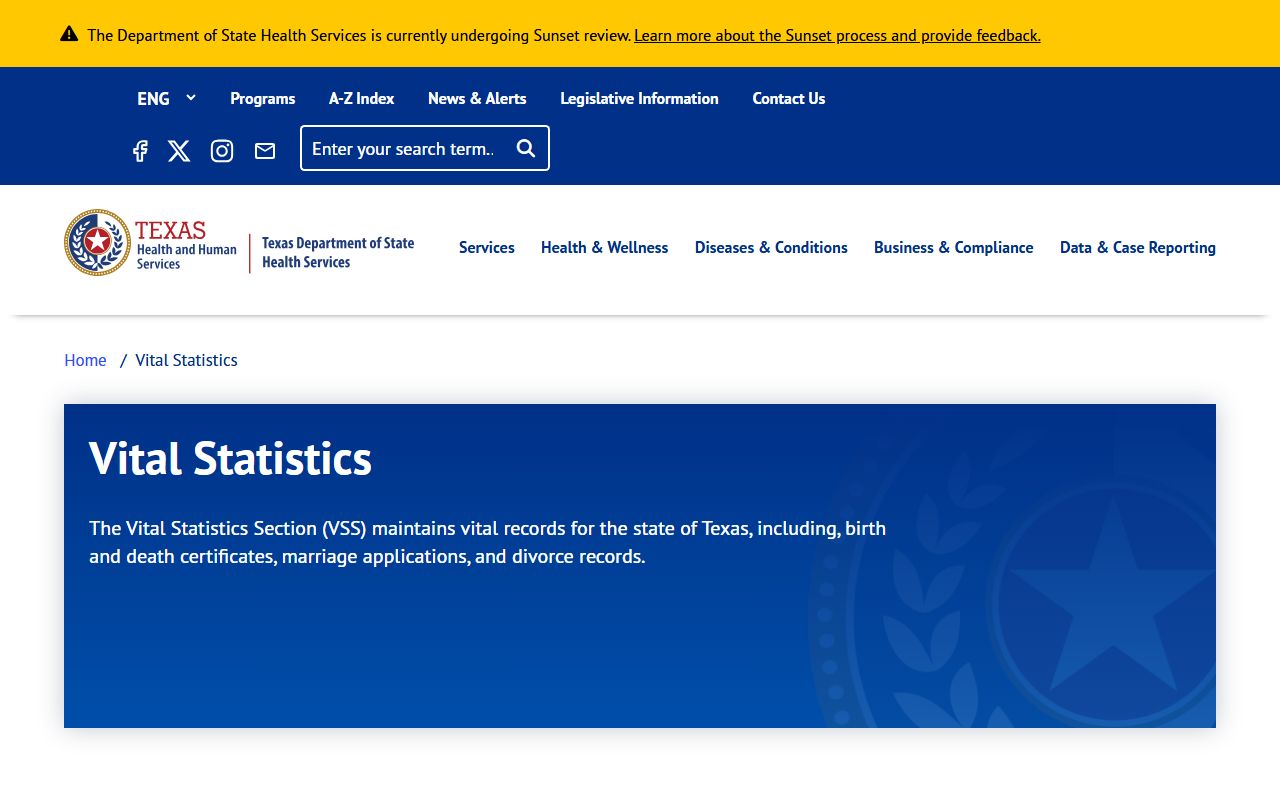
Use the DSHS portal to order certified Bailey County death certificates online or by phone.
Cities in Bailey County
Muleshoe is the county seat and largest city in Bailey County. No cities in Bailey County meet the population threshold for a dedicated city page. Residents seeking death records should contact the Bailey County Clerk directly at the address listed above.
Nearby Counties
Counties bordering Bailey County include Castro County to the north, Lamb County to the east, and Parmer County to the northwest. Hockley County and Terry County lie to the southeast and south. Each county maintains its own death records through the local clerk's office.